
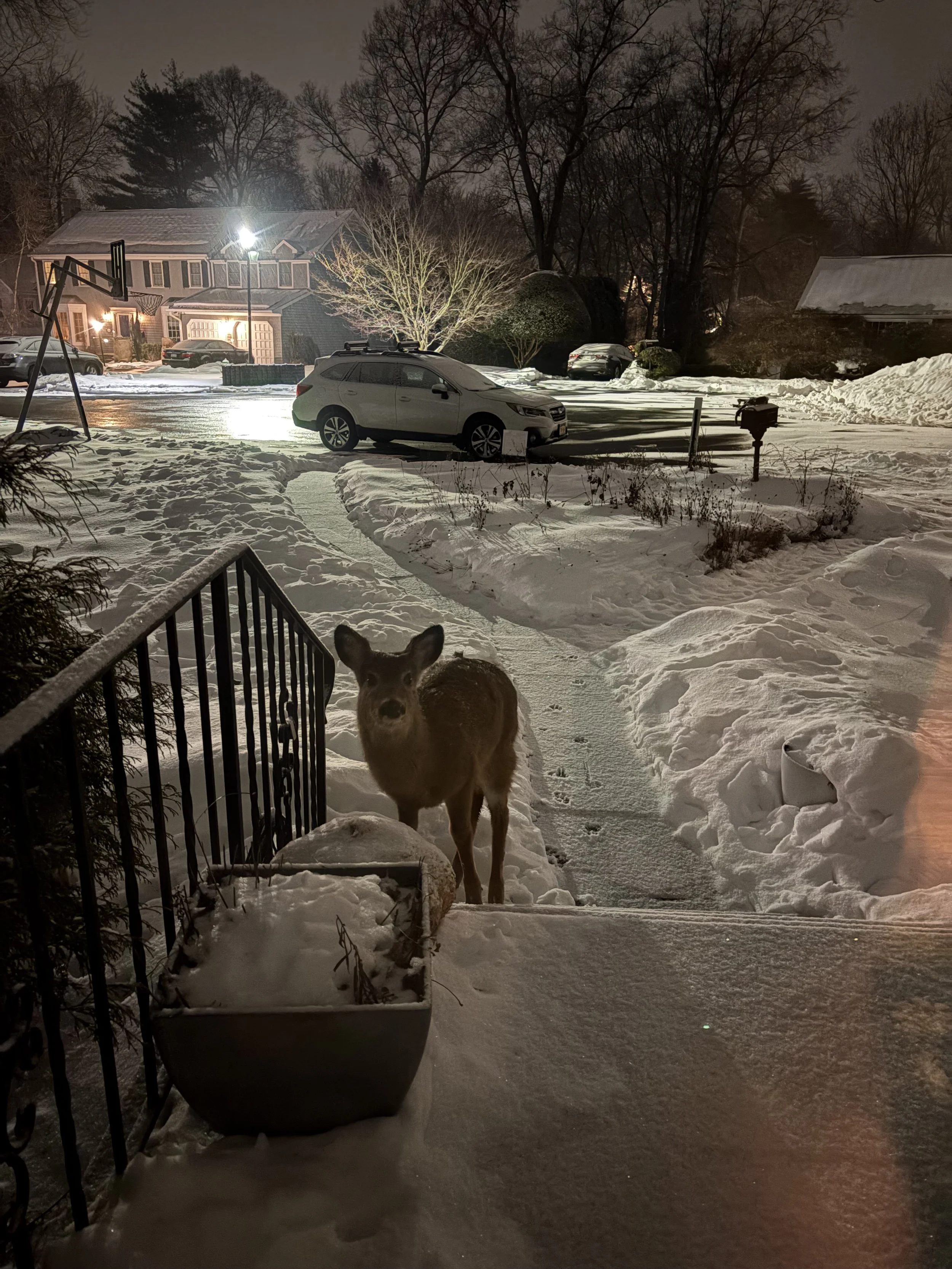
Doe, a deer!
Right now, we're in the middle of our second major snowfall of the season, and I know cycling may be the furthest thing from your mind. Fair enough. But here's the thing -- winter is actually one of the best times to lay a foundation for a strong ride. You don't need to be logging miles in a blizzard to make progress. A little intentional movement now, even indoors, can make a huge difference when the weather finally cooperates.
IS YOUR BIKE READY?
I know the feeling: "Where's my bike? I think it's in the garage... somewhere." March is the time to dig it out and bring it in to your local shop. Have the cables checked, the wheels trued, and the drivetrain cleaned of last year's gunk. I also like to start each spring with fresh handlebar tape -- it's a small thing, but it makes the bike feel new again.
While you're at it, there are a few basic maintenance skills every rider should have in their back pocket:
Lube your chain. Your chain and gears are metal on metal -- they need care. Pick up a bike-specific lubricant; I'm a fan of ceramic lube for the spring, which reduces friction, repels dirt, and lasts longer than standard wet or dry lubes. In the summer, I move to dry lube. To apply it, wipe your chain down with a clean rag first, then apply a single drop of lube to each link while slowly backpedaling. Let it sit for a few minutes, then wipe off the excess -- too much lube attracts grime. Over time, grit builds up, and you'll want to degrease the chain entirely before re-lubricating. A good rule of thumb: degrease every few months of regular riding, or whenever the chain starts looking gunky. This video is a great primer: https://www.youtube.com/watch?v=cqkitFhUq_4
Pump your tires before every ride. Yes, every single ride. Road bike tires run at high pressure -- typically 100 to 120 psi -- and they lose air even when sitting still. Make sure you have a quality floor pump with a gauge and know how to use it. This one step prevents a surprising number of problems out on the road.
Know how to change an inner tube. At some point, you will get a flat. It's not hard to fix, but it can be a pain if you're not prepared. Keep a spare tube, a set of tire levers, and either a small hand pump or a CO2 inflator in a saddle bag mounted under your seat. I also keep a multitool in there. Watch a YouTube video this winter and practice at home -- you'll be glad you did.
Know how to adjust your seat and handlebars. When bikes get transported, things get bumped out of position. And as your fitness and riding style evolve, you may want to make small adjustments. Understanding the basics here gives you flexibility and keeps you comfortable on long rides.
DO YOU NEED TO BUY A BIKE?
I'm jealous. New Bike Day is the best.
A few things to keep in mind: be honest with yourself about the type of rider you are right now, not the rider you hope to be someday. Don't buy a bike because you imagine yourself racing through Alpe d'Huez (and if that's actually your plan, again, I'm jealous). If your longest ride to date has been 10 miles and your goal is 50, get the bike that fits your current reality with that 50-mile goal in mind. If you're just getting started, the goal is to build a biking habit on a machine you genuinely love. That doesn't mean emptying your bank account. It means getting a bike that fits properly, is made of materials suited to your riding goals, and makes you feel good every time you swing a leg over it.
I love bike shops and believe strongly in having a relationship with your local one. That said, shops in our area vary widely in inventory and price point. Greenwich alone has three shops, each with a very different range. Some shops carry primarily high-end brands and simply don't have the floor space or inventory for moderately priced bikes. Know your budget going in, do a little research, and don't be afraid to visit a few shops before committing.
On that note -- fit matters more than price. A properly fitted $600 bike will be more enjoyable to ride than an improperly fitted $10,000 one. I guarantee it. Discomfort compounds over the miles, and a bike that doesn't fit will eventually make you not want to ride at all.
If you're buying new, go to a shop that will put you on a trainer, take your measurements, and order the right size and configuration for your body. If you're working with an existing bike or buying used, get a proper fitting done by a shop. They'll make sure your hips are square, your knees are aligned, your handlebars are set correctly, and your brakes and cables are in good shape. It's worth every penny.
A WORD ON SPIN CLASSES
Love them! Do them! But understand what they are -- and what they aren't.
Spin classes are typically under an hour, and the goal is to push you hard: max effort, strong heart and lungs, powerful legs. All of that is great training for any kind of riding. But a long outdoor ride is a different animal. Out on the road, we're playing the long game -- riding efficiently, using our gears to do the work, conserving energy, and yes, enjoying the moments when gravity does us a favor on a downhill.
If you're used to grinding it out in spin class and spending a lot of time out of the saddle, you may need to dial that back when you hit the road. To keep moving for five or six hours at a time, the goal is to go as far and as fast as possible while using the least amount of energy. It's a different mindset, and the sooner you start building it, the better.
SNACKS, SNACKS, SNACKS
Now is a great time to beta test your ride fuel.
One of the biggest differences between a 45-minute class and a full-day ride is that on the road, you need to refuel at least once an hour. I used to think of it in terms of carbs -- roughly 30 to 45 grams per hour -- but these days I find it easier to think in real food: a pack of M&Ms, half a sandwich, half a banana. You want something portable, easy to eat while moving, and most importantly, something you actually like.
Some of my go-to's: That's It bars, Made Good Granola Bites, and bananas. Start experimenting now so you know what works for your stomach before you're 30 miles in.
That's it for now! Let's hunker down in the storm -- maybe knock out a Peloton class or two -- and start getting excited for the road ahead. Check out my training schedule here and get signed up:
More soon. Stay warm and stay moving.
Ride on,
Coach Jon