
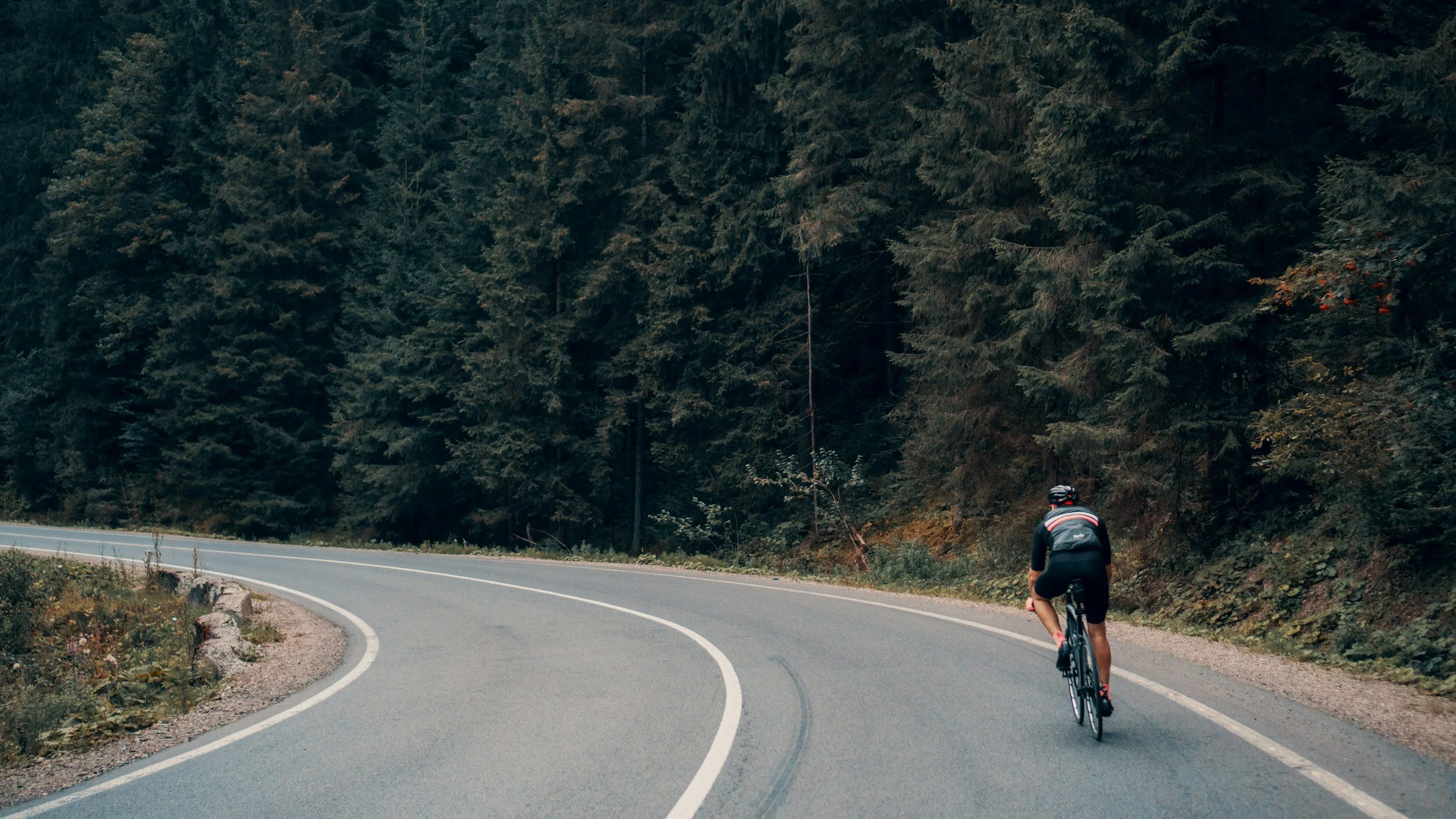
The Gear You Actually Need
I had a conversation recently with a potential rider who was excited about joining us but had no idea what gear to buy. And that's totally normal. When you're new to cycling, the gear options are overwhelming, the prices range from reasonable to absurd, and nobody tells you what actually matters versus what's just marketing.
So here's the honest rundown. This is what you need, what you might want, and what you can skip entirely.
01 Helmets
Non-negotiable. You do not ride without a helmet. Ever.
When you're shopping, look for a helmet with MIPS technology (Multi-directional Impact Protection System). MIPS adds a low-friction layer inside the helmet that allows it to rotate slightly on impact, reducing rotational forces on your brain. It's one of the most meaningful safety advances in cycling gear over the past decade, and it's available at nearly every price point now.
You'll notice that helmets come in road-specific and mountain bike-specific designs. The key differences come down to venting and coverage. Road helmets prioritize airflow with large vents to keep you cool over long rides. Mountain bike and BMX helmets provide more coverage around the back of the head and are built to take harder hits, but they run hotter because of it.
For our rides, you want a road helmet. You need enough venting to stay cool and comfortable over 20, 40, 60 miles. An MTB helmet on a July ride in Westchester will cook you. Road helmets from Giro, Bell, Specialized, and others come with MIPS starting around $60-80. You don't need to spend $250 to be safe.
02 Shorts
Here it is. The hidden gem. The most important piece of gear you will buy. The thing nobody tells you about until you've already suffered through a ride in running shorts and wondered why you can't sit down the next day.
I cannot overstate this: get good shorts.
How good? The best your budget will allow. This is not the place to save $30. Quality cycling shorts from a reputable brand make a profound difference in your happiness, your ability to recover after a ride, your skin health, and your comfort both on and off the bike.
If you buy one piece of gear based on this post, make it the shorts. Everything else can be upgraded over time. Bad shorts will make you miserable on day one.
The secret is the chamois (pronounced "shammy"), which is the padded insert sewn into cycling shorts. A good chamois is engineered to reduce friction, wick moisture, and cushion you in the places that take the most pressure on a bike saddle. A cheap chamois bunches up, holds moisture, and creates the kind of problems you really don't want to deal with 30 miles from home.
Brands that consistently deliver quality chamois construction:
You'll see two styles: traditional shorts (tight, lycra, pull-on) and bib shorts (same thing but with suspender-like straps over the shoulders). Bibs are more comfortable for longer rides because they eliminate the waistband. But either works. Pick whichever style you're comfortable in.
You wear cycling shorts with nothing underneath. No underwear. The chamois is designed to sit directly against your skin. Adding a layer between you and the chamois defeats the entire purpose and creates exactly the friction issues the shorts are designed to prevent.
03 Gloves
Gloves are a "maybe" for me. When I pack my gear for a ride, gloves are the thing I look at and think... do I feel like it today?
Here's the honest case for them: if you crash, your hands are the first thing to hit the pavement. Gloves protect your palms from road rash, and that matters. They also help with sweat management on hot days and provide a bit of padding on rough roads.
Here's the honest case against them: I never want more grip on my handlebars. My hands are pretty tough. And on a hot day, one more piece of gear trapping heat is one more thing making me uncomfortable.
Use them if you like them. Skip them if you don't. They are not a dealbreaker. If you do go with gloves, look for fingerless cycling gloves with a light palm pad. Don't overthink this one.
04 Shoes
Running shoes are not great for cycling. They're designed to absorb impact, which means they're soft and squishy. That's the opposite of what you want on a bike. Every pedal stroke in a running shoe, your foot flexes and energy gets lost in the cushioning. It's like trying to push a car while standing on a mattress.
You want a shoe with a stiff sole that transfers your power directly to the pedal. There are two paths here depending on your pedal setup.
If you're on flat pedals (no clips), look for a cycling-specific flat shoe. These look like casual sneakers but have a rigid sole and grippy tread designed for pedal contact. A great entry point is something like the Shimano ET501. It's a flat-sole touring shoe that looks like a normal shoe, walks comfortably off the bike, and provides proper power transfer on the pedals. You can wear them to a coffee shop after a ride and nobody would know the difference.
If you're on clipless pedals (the kind where your shoe clicks into the pedal), you should have already purchased compatible shoes when you bought the pedals. The shoe and pedal need to share the same cleat system, so make sure they match. Your local bike shop will set this up for you.
A long time. Mine are 15 years old and still going. Unlike running shoes, cycling shoes don't take the same kind of impact abuse, so the soles don't break down the same way. If the fit is good and the closure system still works, they'll last you for years.
05 Jerseys
The functional case for a cycling jersey is the pockets. Three pockets across the lower back give you a place to stash your phone, a snack, your keys, and a spare tube. If you don't have a saddle bag, those pockets become pretty important on longer rides.
The material is also designed to wick moisture and dry fast, which matters when you're sweating for two hours straight. And the cut is tailored so it doesn't flap around in the wind like a regular t-shirt.
That said, there's no law saying you have to dress like a superhero on a bike ride. If you have a saddle bag and you'd rather ride in a comfortable moisture-wicking athletic shirt, go for it. Especially on our training rides, comfort beats style every time.
If you're buying one jersey, get something that fits well and has back pockets. Solid colors are fine. You do not need to look like a sponsored pro to ride with us. Save the team kit fantasies for year two.
The Quick Reference
Must Have: Helmet (MIPS), cycling shorts (best you can afford), cycling shoes (flat or clipless)
Nice to Have: Jersey with pockets, saddle bag with a spare tube and CO2
Your Call: Gloves, sunglasses, arm warmers, cycling socks
Don't try to buy everything at once. Start with the essentials, ride a few times, and figure out what you actually need based on your own experience. Every rider is different. The gear that matters most to you after 100 miles might be completely different from what matters to the person next to you.
But get the shorts. Trust me on the shorts.
Questions about gear? Reach out to Coach Jon anytime. That's what I'm here for.