
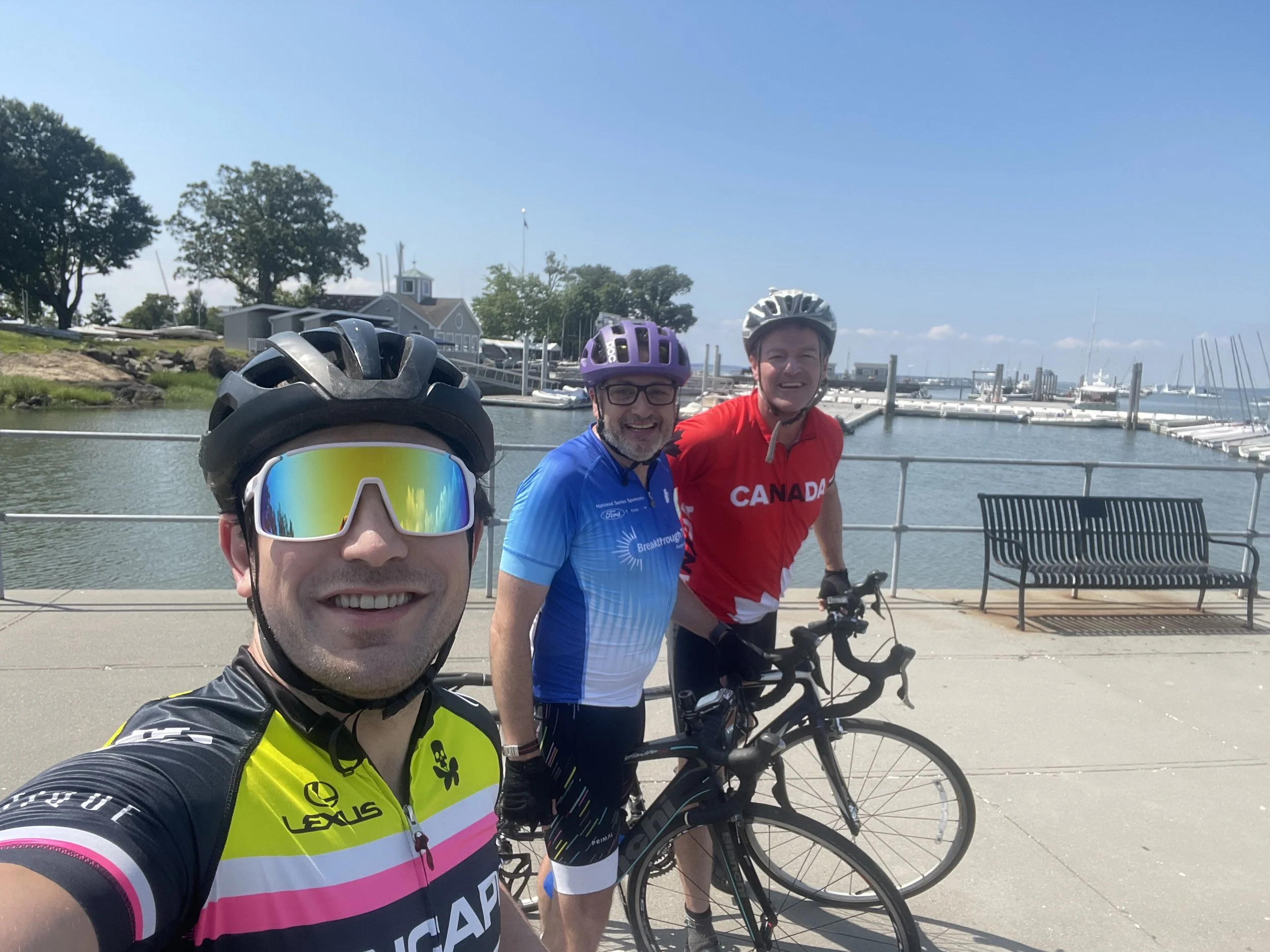
Milton Point, Rye, NY
How to Ride in a Group Without Making Enemies
Group riding is one of the best things about cycling -- the drafting, the shared effort, the feeling of rolling through Westchester with a pack of people who showed up for the same reason you did. Once you get comfortable with a few basic habits, it becomes second nature and the whole ride opens up. Here's what makes it click.
It all comes down to two words: predictability and communication. When the rider behind you always knows what you're about to do, everything flows.
What to Bring
A well-packed kit means you spend the ride enjoying it instead of improvising. Here's the setup that covers you for a great day out.
ID, insurance card, emergency contact, any relevant health info, phone, and a little cash. Keep it all accessible on your person so it's there when it counts.
A spare tube in the right size for your wheel, tire levers, and a pump or CO2 cartridge. A flat at mile 15 is an adventure when you're prepared and a disaster when you're not.
Two full water bottles or a hydration pack. Start sipping early and keep sipping -- by the time you feel thirsty, your body is already running behind.
Bars, trail mix, whatever fuels you well. Eat before you're hungry, and stick with what you know -- a long ride is a genuinely terrible time to try something new.
Before You Roll
Pump your tires the night before so you catch a slow leak at home instead of at mile 12. Give your brakes a quick squeeze, scan your tires for anything embedded in the rubber, and lube your chain if it needs it. Eat a solid breakfast at least two hours before the start -- you'll feel the difference.
Riding in the Pack
Stay right, hold a straight line, and keep a safe gap from the wheel ahead. The big one: never overlap your front wheel with the rear wheel of the rider in front. If your wheels touch, you go down -- it's physics, not bad luck. Keep pedaling even when you want to coast; a steady cadence keeps the whole group flowing smoothly and makes you a pleasure to ride behind.
Say "car back," "slowing," "stopping," "on your left," "hole," "gravel." Every time. Pass it down the line yourself -- don't assume the rider behind you caught it from someone else. One thing I never call: "clear." Every rider judges each intersection independently. A situation can change in seconds and no one should be crossing on your word.
Left side only. Look back before you move. Call "on your left" to every rider you pass, not just the first. Once you're clear, communicate before moving back into line.
Single file on the shoulder, fully clear of the lane. Give everyone a moment to catch their breath -- it's one of the best parts of the ride. Just keep your bike out of traffic.
Single file is always the rule. It keeps the group predictable to cars, to other cyclists, and to each other. When in doubt, tighten up the line.
The Roads Are Shared
Cyclists have the same legal rights and responsibilities as cars in New York -- which means we also get the same respect when we ride like we belong there. Signal your turns, stop at lights, and ride with traffic. On winding roads, hug the right -- cars cut corners and drift across the yellow line more than you'd expect. The car you're not expecting is always the one to watch for.
Quiet roads have a paradox: you don't expect cars to be there, and cars don't expect you. Ride like something might come around every blind corner, because occasionally it does.
Climbing and Descending
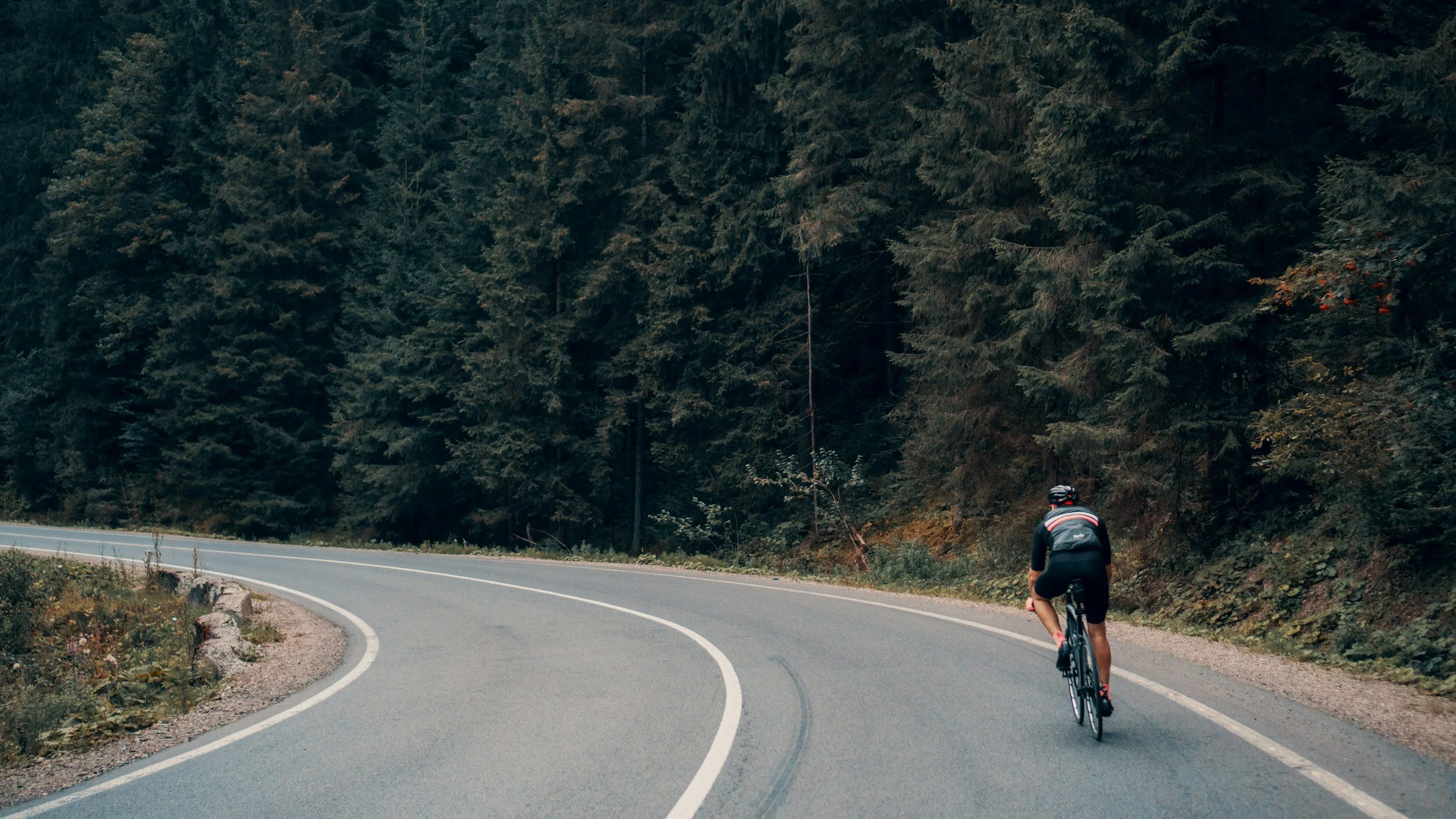
Going up: sit tall, breathe deep, spin a lighter gear rather than grinding. Weight back on the saddle, hands loose on top of the bars. The riders who look effortless on climbs have usually just learned to stay relaxed. Going down: hands in the drops or on the hoods, weight back, feet level with the outside foot down on curves. Look far ahead -- three telephone poles is a good rule -- and leave more space between you and the rider in front than you would on the flats.
If Someone Goes Down
Hopefully you never need this. Know it anyway.
⚠ Emergency Protocol
Secure the scene first. If the rider is in the road, stop traffic in both directions before anyone approaches. Use bikes or a car with hazard lights as a shield. Approach slowly -- don't run and become a second hazard.
Do not move the rider. Unless they are in immediate danger from traffic, leave them where they are. Moving someone with a spinal injury can make it catastrophic. Keep them still and calm.
Delegate immediately. One person calls 911. One person directs traffic at a safe distance in each direction. One person stays with the rider. If there are more people, keep bystanders back.
Keep the rider warm and the helmet on. Use a jacket if you have one. Do not remove the helmet, especially if the rider is unconscious. That's the paramedics' job.
See You Out There
The riders who make a group great aren't necessarily the fastest ones -- they're the ones who are smooth, communicative, and aware of everyone around them. That's a skill you can build starting on your very first ride, and it makes the whole experience better for everyone.
-- Coach Jon